

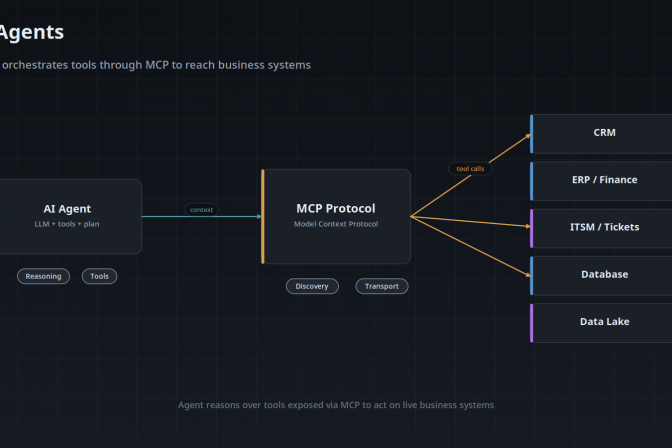
AI Agents
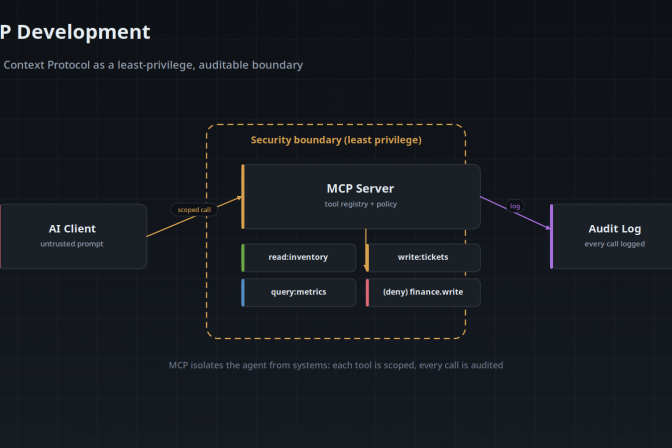
MCP Development
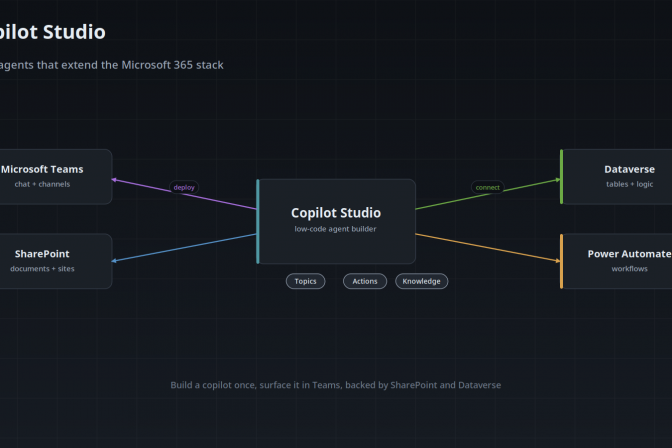
Copilot Studio
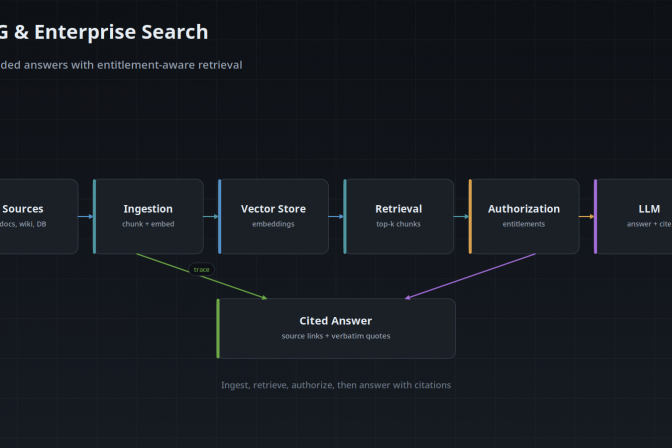
RAG & Enterprise Search
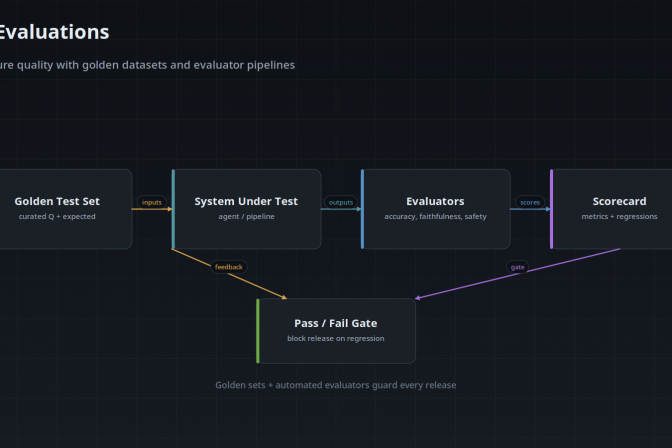
AI Evaluations
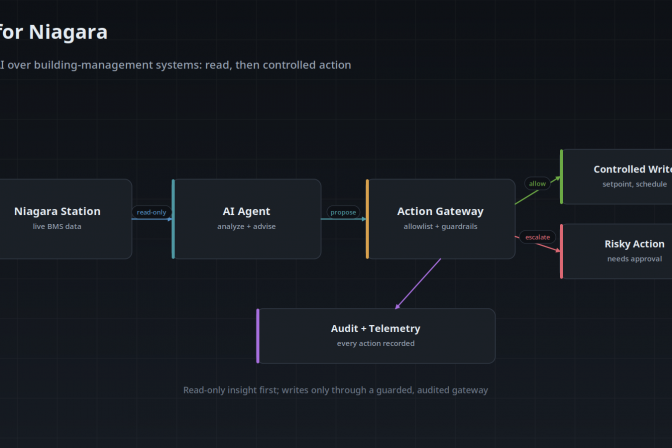
AI for Niagara
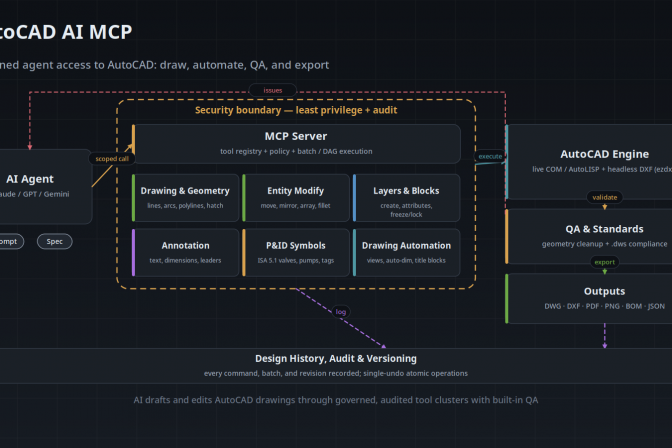
Engineering & CAD Agents
A First AI Project That Is Worth Doing
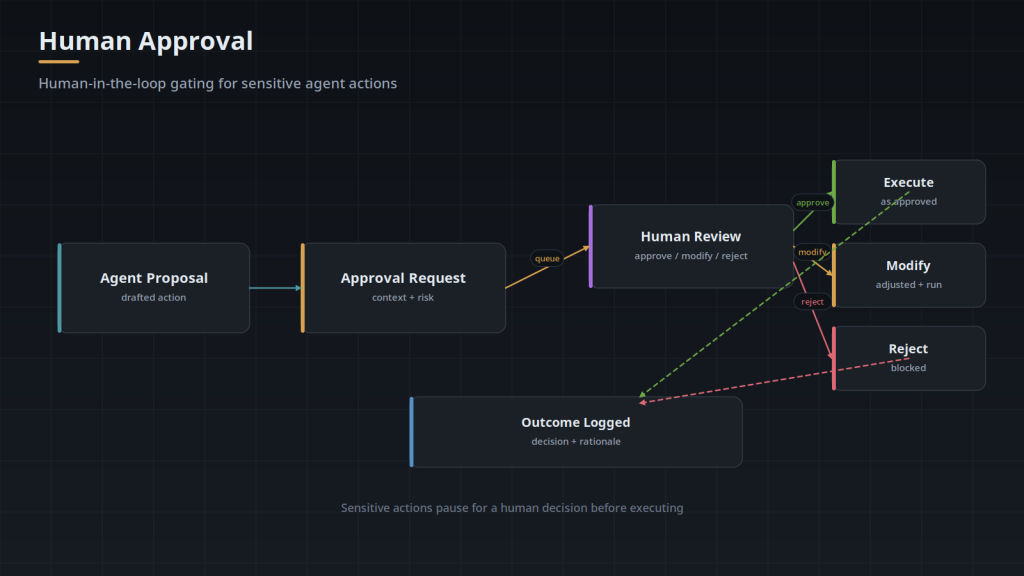
The pattern that works is narrow: one workflow, one named owner, a measurable cost in staff time, and a bounded blast radius. Ship it read-only first and watch what people actually ask for, because it is reliably different from what was specified. Then add the single write action that saves the most effort, with human approval on it until the logs justify removing that step.
Programs scoped across several departments before anything has run in production are where budgets go without producing evidence.
Reads and Writes Are Different Projects
Reading is comparatively straightforward. Writing changes the risk profile entirely: a wrong answer wastes someone's time, while a wrong write creates a record somebody has to find and undo. The engineering that separates them is permission scoping, idempotency so a retry does not create a second ticket, and an audit trail naming the person on whose behalf the action was taken.
- Identity. Acting as the requesting user, inheriting their existing permissions, beats a shared service account whose broad access every user effectively inherits.
- Approval. Anything that spends money, contacts a customer or deletes data routes through a person until the evidence says otherwise.
- Untrusted input. Content returned from a tool can carry instructions aimed at the model. Prompt injection is the defining risk of this architecture.
- Honest failure. An agent that says it cannot reach a system beats one answering from stale context.
Evaluation Before Rollout, Not After Complaints
A test set of realistic tasks with known-good outcomes, run before deployment and again after every prompt or model change, is what separates a system you can maintain from one you are afraid to touch. Without it, quality is a matter of opinion and regressions go unnoticed until a user reports one.
When Conventional Software Is the Better Answer
If the rules are clear and the inputs are structured, ordinary automation is faster to run and deterministic. Adding a language model to a task a rule already handles makes it slower and less predictable. AI earns its place where the input is unstructured or variable, or where a step needs judgement that resists enumeration.
Where the work involves building-systems data, the AI for Niagara and Operations page describes that crossover specifically.